

The Architecture of Self-Betrayal
Stex House · Budapest · September 26, 2026I kept noticing the same moment, in different people, myself included. Someone knows exactly what they want to do, and does something else instead — wide awake, moving against their own judgment in real time.
I wanted to understand what happens in that gap between knowing and doing — where the movement changes direction, what it looks like as it happens, whether it can be recognized while it's still happening. The sculptures are what happened while I looked.
The strange part was how ordinary each movement looked — starting over, stopping just short of something wanted, turning force back on itself, keeping a shape because it still read correctly from the outside, smoothing over the part that felt uncomfortable. None of it looked dramatic while it was happening. It looked reasonable, which is exactly what let it keep happening unnoticed.
I started asking what would happen if I stopped describing these movements and made them physical instead.
Five sculptures. Five things I noticed.
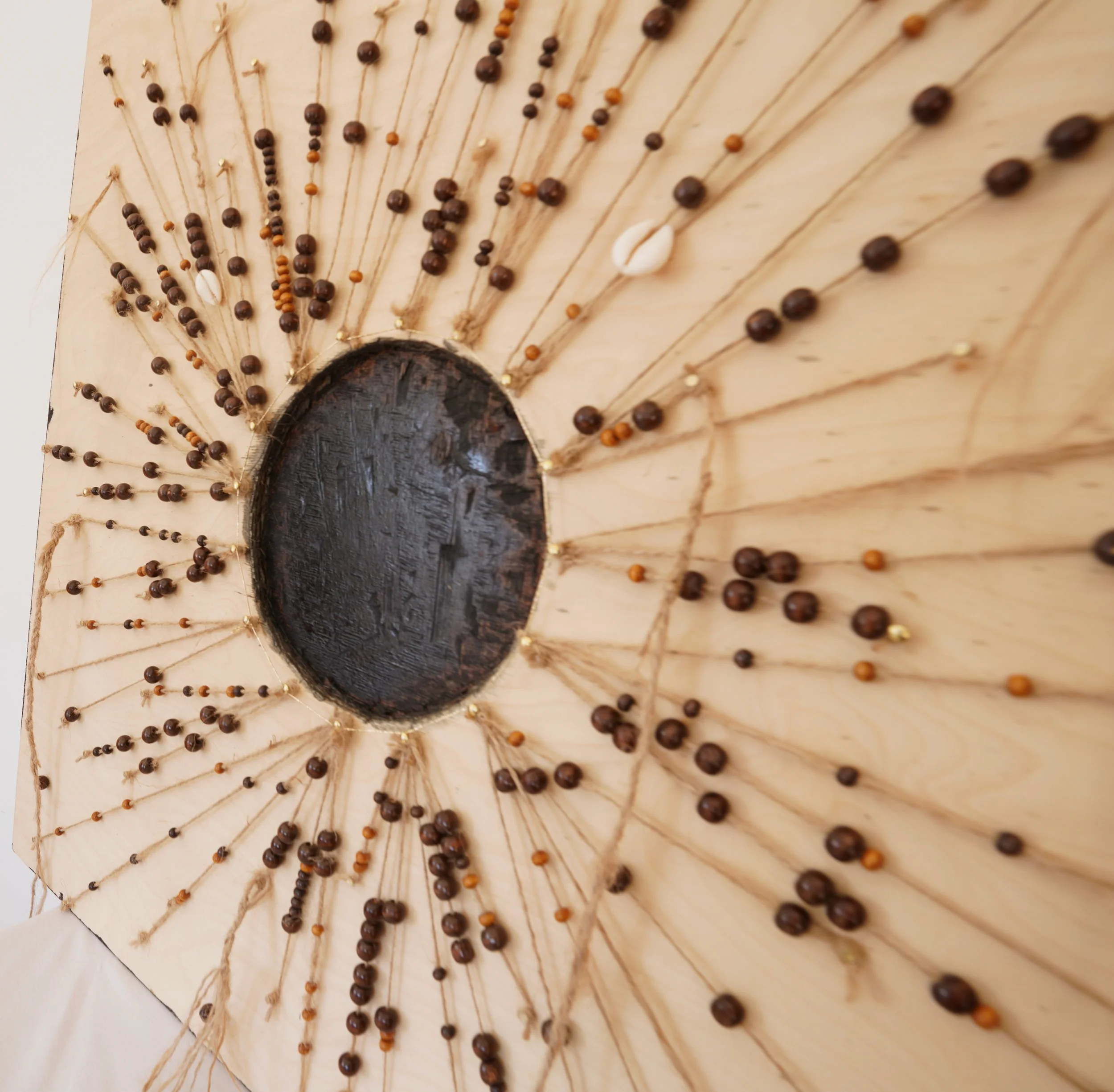
Well Gate
I became interested in the moment just before entry. You can see what you want. You can get close enough to touch it. The distance has almost disappeared, and still something stops.
I wanted to make that moment physical. The gold beads sit outside the circle. The overflow continues from the black centre, whether it's let through or not.
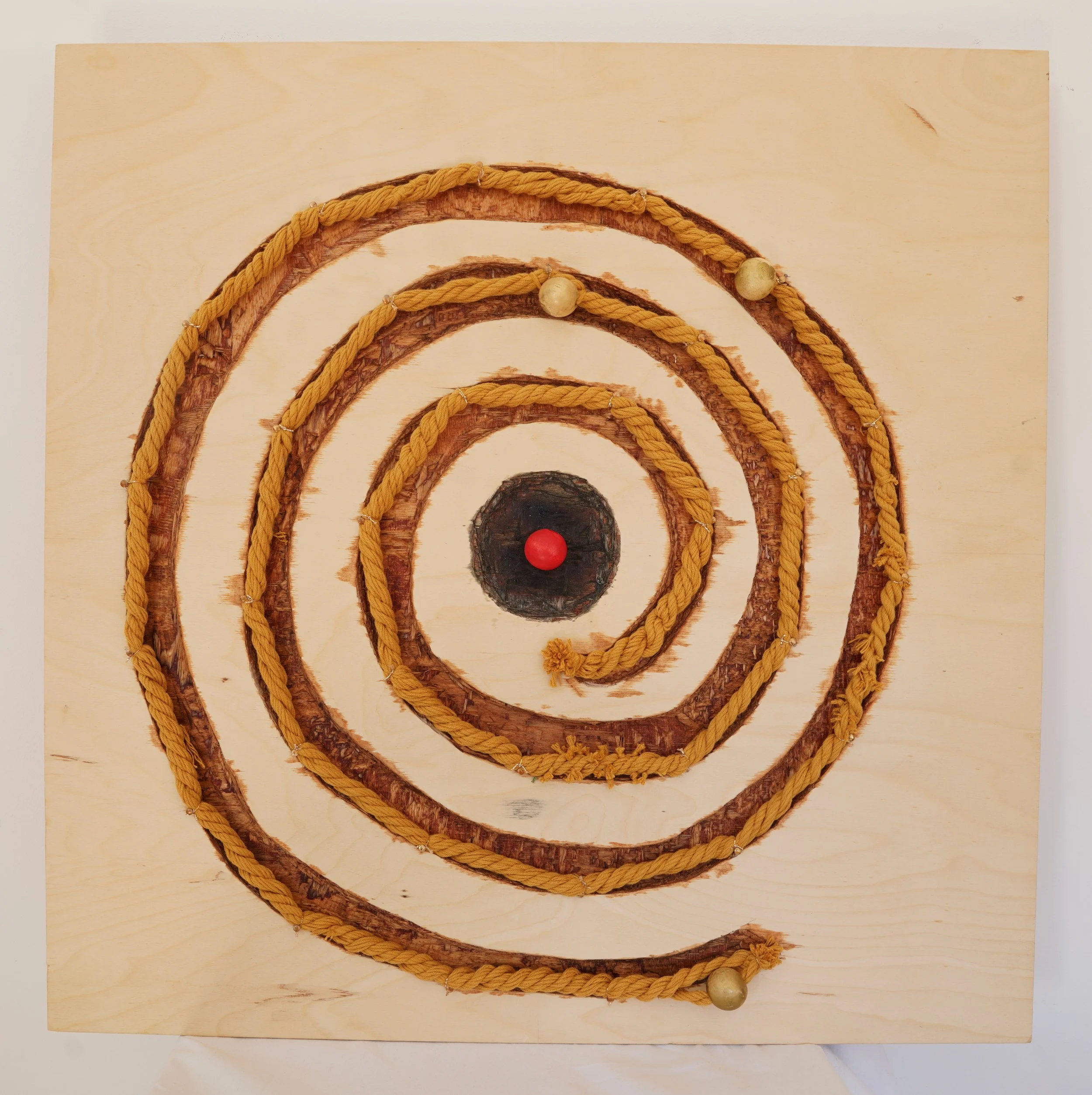
Restart Spiral
The carving tools didn't arrive in time. I stood there with the option to paint the spiral and glue yarn over the top — faster, easier, close enough. Then I asked myself the question directly: is this you avoiding the work?
I bought a chisel and carved it by hand across seven days. I hit my hand more than once — a small, specific pain, the kind that reminds you you're flesh and blood, distinct from the pain that breaks something. A piece about starting over needed to earn that the hard way, on its own material, to mean anything at all.
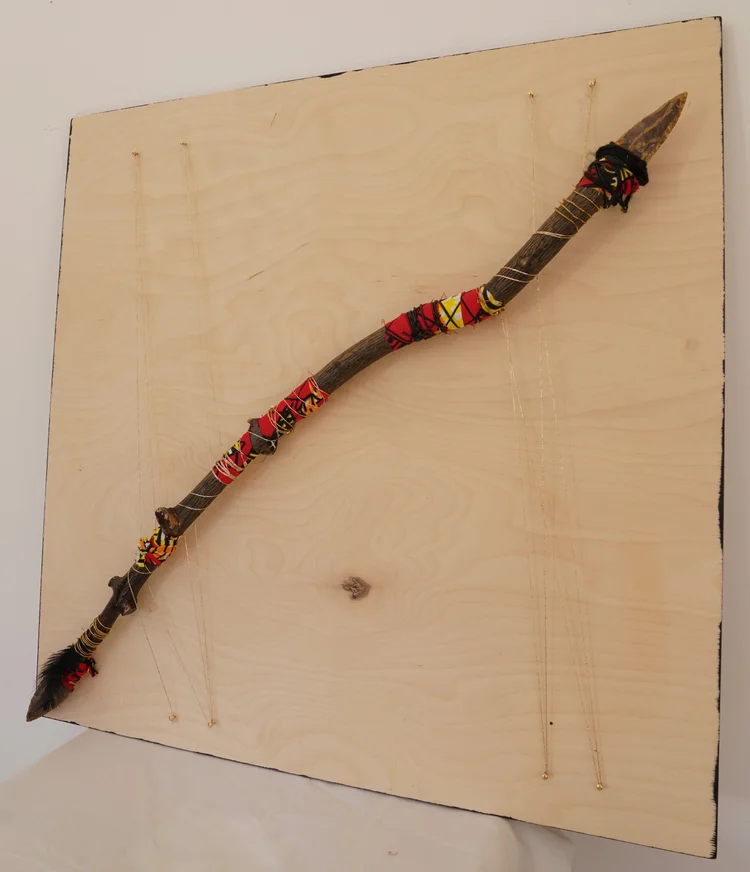
Reverse Spear
I wanted to make force visible without showing movement. Two stone arrowheads face opposite directions. Rope and nails hold the tension between them.
While I was making it, I kept thinking about how hard it is to tell the difference between being stopped and stopping yourself.
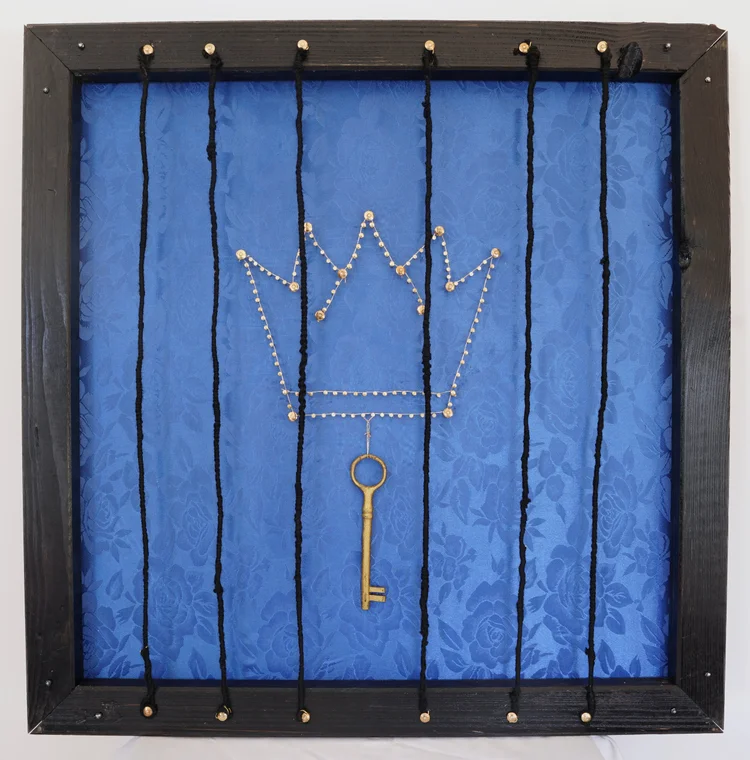
Hollow Crown
This was one of the pieces people seemed to find their own version of. I became interested in what happens when an identity still works socially after it has stopped working on the inside.
A found vintage key, finished in liquid metal, fixed permanently into a crown of brass wire and black yarn. The crown fits. That's what makes it hard to take off.
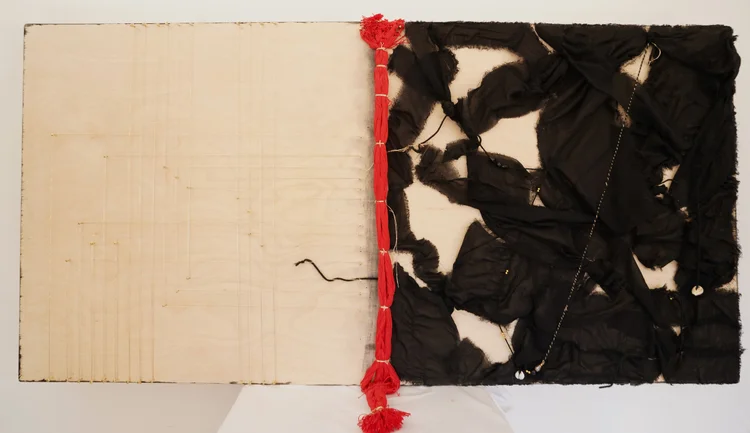
Collision Line
I was making a piece about what happens when two directions collide, and I caught myself doing it, live, while I made it. The clean, precise sections came first — beautiful, exactly as planned. Then I reached the messy section and got disturbed that it wasn't coming out right.
That was the moment: I was trying to make the raw, ugly part beautiful, the exact thing the piece is about. I laughed, caught in the act.
The red line is the point where the two parts meet. Charcoal sits deliberately at the edges, marking the place they arrive at each other. The yarn shifts from black into gold across that same line — the performed self and the real one, merging.
The work became a way of catching the idea in the act.
None of these came out clean on the first attempt. Restart Spiral took seven straight days of hand-carving before the groove was even ready to hold the yarn. Collision Line went through a version that was too composed, too resolved, before I let the mess stay. Every piece has a moment where the material made demands the plan hadn't accounted for — and those demands became part of what the piece ended up meaning.
Once the sculptures left my hands, they started producing meanings I hadn't planned. People stood in front of the same object and saw different things — some talked about work, some about relationships, some about themselves. Men in the room found their own way into pieces I'd built from moments that felt, while I was making them, entirely mine.
I'd spent months investigating these objects from one position. The exhibition showed me what happened once they became independent of my explanation.
For the first time, I could see the research outside my head.
See the Work →